
News Center
News center

The Ministry of Commerce has added 14 EU entities to the export control list, affecting the procurement of pump seals and vacuum components
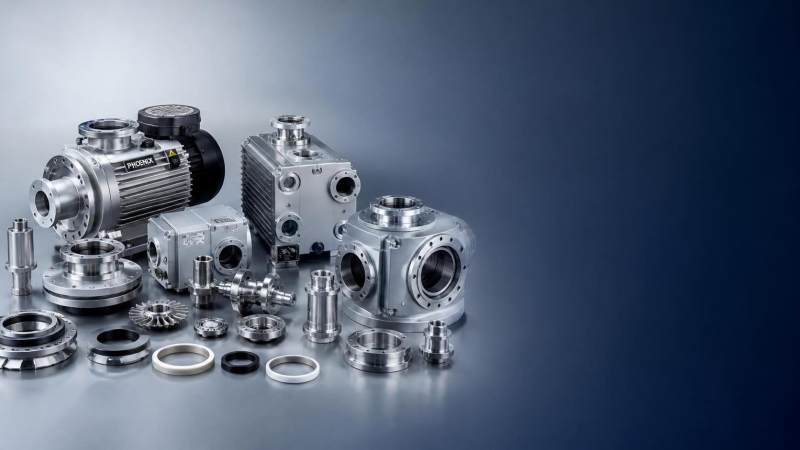
On July 24, 2026, the Ministry of Commerce of China placed 14 EU entities on its export control list. This measure is directly related to the implementation of the Export Control Law and the Regulations on the Export Control of Dual-Use Items. For pump equipment, vacuum acquisition equipment, and related supporting sectors, what deserves attention is not only the list itself, but also the fact that the procurement channels for key supporting products such as high-vacuum seals and special alloy components for pumps made in China are moving into a more stringent compliance review framework. Procurement, delivery, and supply chain stability may consequently come under pressure.
Confirmed Details of This List Adjustment
The confirmed information indicates that on July 24, 2026, the Ministry of Commerce of China announced the inclusion of 14 EU entities, including the Lafatte Group, on the export control list. The relevant legal basis is the Export Control Law and the Regulations on the Export Control of Dual-Use Items. The restrictions mainly concern access to key supporting products such as high-vacuum seals and special alloy components for pumps made in China. The event summary also indicates that this change will directly affect the supply chain stability of European pump equipment manufacturers in China, particularly their compliant procurement channels for cryogenic pumps and vacuum acquisition equipment. Overseas importers need to reassess supplier qualifications and alternative solutions while continuing to monitor the progress of Chinese licensing approvals.
The Impact Extends Beyond Listed Entities to the Relevant Procurement Chain
Supporting Procurement for European Equipment Manufacturing Will Face Greater Constraints
From the perspective of the industrial chain, high-vacuum seals and special alloy components for pumps are key supporting components for certain pump equipment and vacuum systems. For purchasers, manufacturers, and suppliers with business connections to the relevant EU entities, the initial impact will be reflected in compliance checks on procurement channels. Companies need to identify more carefully whether transaction counterparties, end uses, and recipients fall within the controlled scope, while the importance of relevant business documents and internal approval procedures will increase significantly.
Supply Chain Services and Delivery Arrangements in China Face Revalidation
For service activities involving supply chain organization, customs declaration coordination, order fulfillment, or cross-border delivery support, this change may result in higher advance verification requirements. Based on the analysis, orders involving restricted categories will require more thorough verification of supplier qualifications, contracting parties, product technical attributes, and the progress of license applications during execution. Even if transactions are not suspended, delivery schedules may be affected by approval developments. Therefore, delivery-time assessment, inventory preparation, and coordination with alternative procurement options all require greater caution.
Overseas Importers and End Purchasers Need to Reassess Compliant Procurement Channels
The event summary clearly states that overseas importers need to reassess supplier qualifications and alternative solutions. For purchasers, the current priority is to determine whether existing procurement channels still meet compliance requirements, particularly for the procurement of cryogenic pumps, vacuum acquisition equipment, and related key components. Supply sources, technical documents, transaction background statements, and internal record-keeping mechanisms may all become focal points in subsequent reviews. For end purchasers and project execution teams, this means procurement decisions cannot be based solely on price and delivery time; compliance feasibility must also be assessed simultaneously.
What Business Changes Require Closer Attention
First Verify the Qualification Status of Suppliers and Transaction Counterparties
From a practical perspective, companies should first verify whether existing or prospective business partners have direct trading relationships with entities already included on the control list. If procurement, resale, supporting integration, or after-sales service chains are connected to the relevant entities, compliance reviews should be conducted before placing orders rather than being deferred until shipment or customs declaration.
Technical Documents and Supporting Documentation for Key Categories Need to Be More Complete
For procurement involving high-vacuum seals, special alloy components for pumps, and products related to cryogenic pumps and vacuum acquisition equipment, companies need to place greater emphasis on product technical specifications, statements of use, procurement contracts, proof of product flow, and relevant records. Based on the available information, no more detailed implementation requirements have been provided. Therefore, it cannot be concluded that unified and detailed operating guidelines have already been established. However, improving document preparation in advance will help address possible licensing or review requirements.
Delivery Schedules and Alternative Solutions Should Be Included in Procurement Plan Recalculations
As the event summary has indicated that developments in Chinese licensing approvals should be monitored, companies should incorporate approval uncertainty into delivery-time assessments when arranging procurement plans. For projects dependent on key supporting components made in China, screening alternative suppliers, validating substitute materials, and adjusting procurement schedules are currently more appropriately understood as risk-mitigation measures rather than confirmation of conclusions regarding existing business.
Tendering, After-Sales Service, and Quality Traceability Processes Also Require Synchronous Review
For businesses requiring continuous supply or after-sales spare-parts support, tender documents, technical agreements, after-sales commitments, and quality traceability documents should also be reviewed simultaneously. Based on the analysis, such changes may affect not only initial procurement but also extend to compliance requirements for spare-parts replenishment, repair services, and supporting arrangements during project acceptance. Companies should therefore continue to monitor whether the relevant clauses require supplementary explanations.
This Is More Like an Implementation Signal Than a Single Trade-Related News Item
From an industry perspective, this information is better understood as a clear implementation of export control rules with respect to specific entities and key supporting products. Its significance is not a generalized market conclusion, but rather that compliance requirements related to list status, licensing, end use, and identification of transaction counterparties are becoming more concrete. At the same time, the input information does not provide more detailed approval standards, implementation guidelines, or subsequent supporting rules. Therefore, at this stage, it cannot simply be regarded as indicating that all relevant businesses have reached a uniform outcome. Whether clearer licensing timelines, alternative procurement channels, and project execution feedback will emerge remains subject to continued observation.
The Significance for the Industry Lies in the Simultaneous Tightening of Procurement and Compliance
Overall, the practical significance of this event for the industry is that cross-border access to certain key components is no longer merely a supply issue; it has also become a compliance-channel issue. For companies in the pump equipment, vacuum system, and related supporting sectors, it is currently more appropriate to understand this as an implemented regulatory enforcement signal and, at the same time, as a dynamic development that requires continued tracking. In the short term, companies should focus more on identifying transaction counterparties, reviewing supplier qualifications, ensuring documentation is complete, and monitoring licensing progress, rather than reaching premature conclusions about market outcomes.
Basis of This Article and Directions for Further Verification
This article was generated based on the information title, event date, and event summary provided by the user. Events of this type typically require further cross-verification against official announcements, publications by regulatory authorities, information from customs or trade authorities, industry association information, documents issued by standards organizations, and reports from authoritative media. Since the input information does not provide a specific link to an official source, the relevant links and more detailed implementation basis still require ongoing verification. Matters worthy of continued observation include policy details, licensing approval guidelines, changes to certification and tender documents, industry feedback, and the actual implementation by companies.