
News Center
News center

The new EU REACH restricted substances provisions for pump motors will take effect next year.
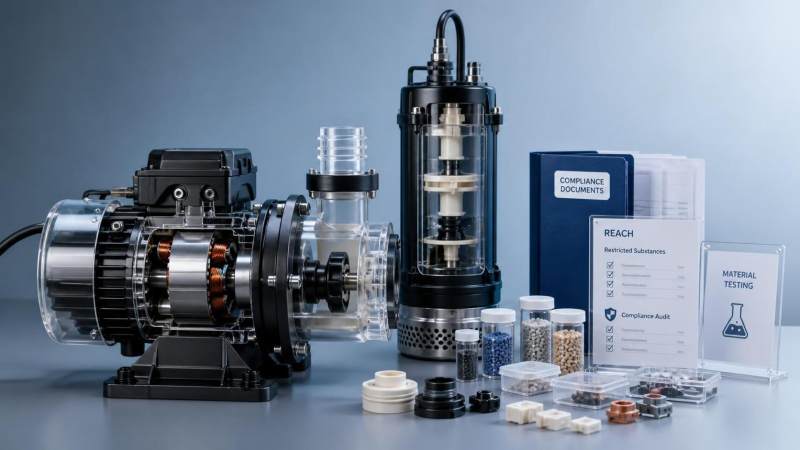
On August 16, 2026, the European Commission issued Amendment Regulation (EU) 2026/1487, adding four phthalate plasticizers and one new flame retardant, a TBBPA derivative, to Annex XVII of REACH. The regulation explicitly applies to pump motors containing plastic components, including drive units for land-based pumps and submersible pumps. According to the disclosed information, the new rules will become mandatory on September 1, 2026.
The focus of this amendment is not limited to expanding the list of regulated chemical substances. More importantly, it further applies material restriction requirements to specific electromechanical products. For motor exporters targeting the EU market, compliance requirements are no longer limited to the component level but directly affect the shipment conditions of complete machines or drive units. The summary information indicates that products without a Declaration of Conformity and an SVHC test report will be refused customs clearance. This means that companies need to complete the documentation preparation, testing arrangements, and consistency checks for technical documents before customs declaration.
The impact is first reflected in the export compliance chain
The direct impact of this amendment on Chinese motor exporters is that existing certification and documentation procedures may need to be revalidated. For pump motor products containing plastic components, companies need to recheck whether the materials used, supporting components, and compliance information provided by suppliers cover the requirements for the newly restricted substances. If the existing documentation cannot demonstrate compliance with the new rules, subsequent shipment schedules may face uncertainty.
It is worth noting that the regulatory requirements concern not only test results but also require technical documents to be provided in the official languages of the EU and accept market surveillance inspections by Member States. For companies, this raises the requirements for more refined document management. Even if the products themselves have completed testing, inconsistencies among the technical document version, language, material information, and Declaration of Conformity may still expose problems during market surveillance or customs clearance.
What should companies pay closer attention to now?
Based on the information currently available, companies should focus more on three areas in the short term.
- Material and component screening: Pump motors containing plastic components will be key products subject to scrutiny. Companies should first confirm whether the relevant materials involve any newly restricted substances.
- Coordination between testing and declaration documents: SVHC test reports and Declarations of Conformity will serve as important supporting documents for entering the EU market, and the correspondence between these documents needs to be clear.
- Technical document language and retention mechanisms: Technical documents must be provided in the official languages of the EU. Version management for manuals, declarations, test materials, and technical files may become a critical aspect of actual implementation.
From an operational perspective, changes of this kind often transfer compliance pressure upstream through the supply chain. Motor manufacturers need not only to review their own product designs and material usage but also to reconfirm whether the material declarations, test data, and change-notification mechanisms provided by suppliers are sufficiently stable. The extent of the subsequent impact will still depend on whether a company's existing compliance system has the capacity to continuously update its response to EU requirements concerning restricted substances.
What signal does this send?
The industry signal conveyed by this amendment is relatively clear: EU regulation of chemical substance restrictions in electromechanical products is moving further toward product-specific implementation, documentation, and inspection readiness. For exporters that have long relied on the EU market, compliance is no longer merely a supporting action for individual orders but is increasingly becoming an ongoing market access condition.
Based on the current information, future industry attention may extend beyond the newly added substances themselves to the enforcement standards applied by Member State market surveillance authorities, the specific requirements for technical document reviews, and how companies can establish more stable delivery processes covering testing, declarations, and multilingual documentation. These subsequent developments still require continuous observation in conjunction with official announcements, regulatory authority information, public corporate disclosures, and other relevant publicly available documents.
This article was generated based on the information provided for this update. The confirmed facts are limited to the amendment publication date, the regulatory changes, the applicable product scope, the implementation date, and the compliance requirements and customs clearance impacts mentioned in the summary. The judgments regarding the industry impact and corporate response are analytical interpretations based on the information currently available. Subsequent developments should continue to be assessed in accordance with publicly available regulatory documents and actual enforcement practices.