
News Center
News center

EU to Mandatorily Implement Dual Energy Efficiency and EMC Requirements for Vacuum Pumps from July 24
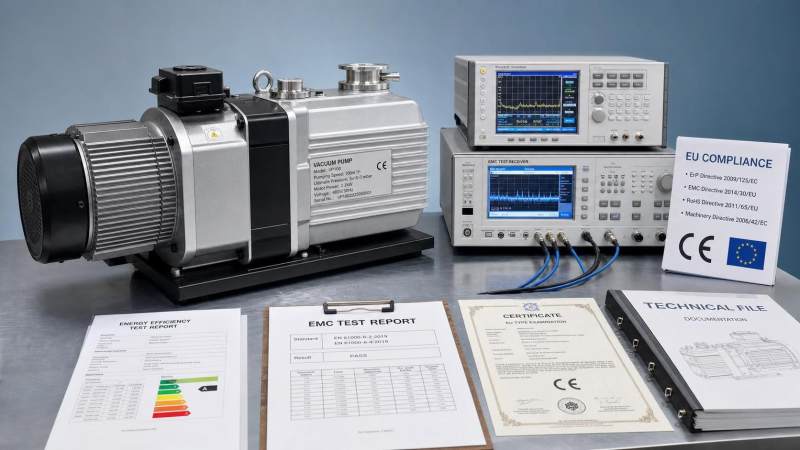
On July 24, 2026, Regulation (EU) 2026/1389 officially entered into force under the European Commission, introducing new compliance requirements for imported vacuum pump equipment. These changes cover all motor-driven vacuum-generating equipment, adding two key requirements: energy efficiency classes and electromagnetic compatibility. They also establish explicit requirements for type testing, nameplate marking, and accompanying documentation. For vacuum pump exporters, manufacturers, distributors, and purchasers targeting the EU market, this is not merely an update to documentation; it directly affects whether products can clear customs, be listed for sale, and continue to be sold.
Compliance Requirements Clearly Defined in the New Regulation
According to the information provided, Regulation (EU) 2026/1389 officially entered into force under the European Commission on July 24, 2026.
The regulation applies to imported vacuum pump equipment and introduces energy efficiency requirements, namely ErP Tier 2, as well as enhanced electromagnetic compatibility (EMC) testing requirements.
The scope covers all motor-driven vacuum-generating equipment.
Regarding documentation and marking requirements, exporters must provide a complete type test report issued by an EU-recognized laboratory. At the same time, the product nameplate and accompanying documentation must clearly indicate the energy efficiency class and EMC immunity level.
For products that fail to meet the above requirements, the confirmed consequences are possible customs clearance refusal or delisting.
Which Business Areas Will Feel the Changes First
Trade and Export Activities Shipping to the EU
From an industry perspective, trading companies and exporters shipping directly to the EU market will be affected first, because the new regulation directly treats type test reports, nameplate information, and accompanying documentation as compliance conditions. The initial impact will be seen in customs declarations, customer delivery, and product listing and sales. What deserves greater attention now is that companies need to confirm whether their existing product documentation fully corresponds to the new requirements, avoiding incomplete documentation or inconsistent markings before or after shipment.
Product Confirmation and Documentation Preparation on the Manufacturing Side
For processing and manufacturing companies, the impact is not limited to testing itself; it also involves product definition, documentation output, and delivery consistency. Since the new regulation covers all motor-driven vacuum-generating equipment, manufacturers need to identify which models fall within the applicable scope and whether existing technical documents, nameplate information, and accompanying documentation are consistent with the test results. This analysis indicates that the change will make the coordination requirements between manufacturing and compliance documentation management more specific.
Listing and Acceptance Risks for Distributors and Purchasers
Distributors, purchasers, and end-user application companies may also be directly affected. This is because non-compliant products face not only customs clearance risks but also the explicit consequence of delisting. For these parties, the main impact will be concentrated in purchasing acceptance, supplier selection, inventory planning, and customer delivery confirmation. The change to note is that purchasing criteria may no longer focus solely on product performance and price, but will place greater emphasis on the verifiability of type test reports, energy efficiency classes, and EMC immunity levels.
Supporting Activities Related to Testing and Compliance Services
For supply chain service companies and related service providers, this new regulation means that work related to testing, document review, and label and documentation management will become more important in business processes. The core impact on these parties is not market demand itself, but rather that delivery schedules and the completeness of compliance evidence will become key points in actual contract performance.
Which Practical Issues Should Companies Focus on Now
First Verify Whether the Products Fall Within the Applicable Scope
Based on the confirmed information, the applicable products are all motor-driven vacuum-generating equipment. For companies, the primary task is to verify whether their exported products, models currently on sale, or equipment planned for shipment fall within this scope. Only after clarifying the applicable boundaries can subsequent testing, documentation, and delivery arrangements have a practical basis.
Make the Type Test Report a Prerequisite for Delivery
The new regulation clearly requires exporters to provide a complete type test report issued by an EU-recognized laboratory. In practice, it is important to note that this requirement is not merely a general supplementary explanation, but a mandatory document directly linked to customs clearance and sales outcomes. When accepting orders, arranging production, and planning shipments, companies should verify the report preparation status together with the delivery schedule.
Check Whether Nameplates and Accompanying Documentation Have Been Updated in Sync
In addition to the test report, the product nameplate and accompanying documentation must clearly state the energy efficiency class and EMC immunity level. This analysis indicates that many practical risks may arise not only from whether testing has been conducted, but also from whether the markings and documentation are consistent. This is an area that requires coordinated confirmation among manufacturing, quality control, international trade, and documentation management personnel.
Address Customer Communication and Delivery Contingency Plans in Advance
Since non-compliant products may be refused customs clearance or delisted, companies need to explain the current testing and marking readiness of the relevant products to EU customers, distributors, or purchasers at an earlier stage. This can help reduce discrepancies in delivery expectations and facilitate early adjustments to shipping and acceptance arrangements when documentation is not yet complete.
This Appears to Be a Signal of Compliance Tightening Already in Effect
The following content constitutes observation and analysis. Based on the information currently provided, this news is more appropriately understood as a compliance requirement that has entered the implementation stage, rather than as an issue limited to consultation or a discussion of direction. The reason is straightforward: the regulation has clearly specified its effective date, applicable products, testing requirements, documentation requirements, and consequences of non-compliance.
At the same time, this development is not merely an update to a single technical indicator. The analysis indicates that it puts energy efficiency class requirements and EMC immunity requirements forward together, meaning that companies involved with the EU market need to address the complete cycle of performance compliance, testing evidence, and documentation and marking at the same time. The information currently provided does not indicate whether more detailed implementation guidance will follow, so this still requires continued observation.
A Demarcation Point from Short-Term Implementation to Long-Term Export Management
Overall, the practical significance of this development for the industry is that the market access threshold for vacuum pump equipment entering the EU has been further clarified, with the impact extending directly to customs clearance, product listing, and continued sales. In the short term, it will first appear as a specific compliance implementation change. From a longer-term perspective, it also signals that requirements for testing evidence, documentation consistency, and marking transparency for related products are becoming stricter.
Therefore, it is currently more appropriate to understand this development as an industry update that has already taken effect and requires immediate comparison and implementation, as well as a long-term signal worthy of continued monitoring regarding subsequent implementation guidance and business feedback. For the companies concerned, the key is not to broaden the interpretation, but to promptly confirm whether their products, documentation, and delivery processes are aligned with the new requirements.
Basis of This Article and Directions for Further Verification
This article was generated based on the information title, event date, and event summary provided by the user. The known core information includes: July 24, 2026; Regulation (EU) 2026/1389 officially entering into force under the European Commission; the applicable products being all motor-driven vacuum-generating equipment; the addition of ErP Tier 2 and enhanced EMC testing requirements; the requirement to provide a complete type test report issued by an EU-recognized laboratory; the requirement to clearly state the relevant classes on the nameplate and in the accompanying documentation; and the possibility that non-compliant products will be refused customs clearance or delisted.
Following the general verification process for this type of industry information, subsequent checks should normally continue by comparing official announcements, standards organization documents, corporate announcements, industry association information, and reports from authoritative media. Since no specific official source link was provided in this input, the specific official source link still requires continued verification. If follow-up work continues, the main areas to monitor include whether subsequent official statements provide more detailed explanations and the specific feedback from market participants during implementation.