
News Center
News center

Compliance Review of Vacuum Pump Sealing Materials Following the Addition of New SVHCs under REACH
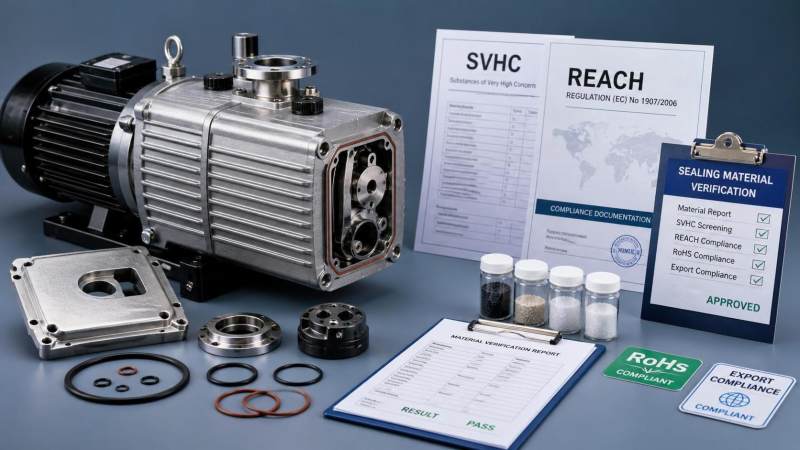
On August 4, 2026, against the backdrop of the latest adjustments to the EU REACH Regulation, material compliance related to vacuum pumps has once again come under industry attention. The European Chemicals Agency (ECHA) has included three phthalate substances in the SVHC Candidate List, among which DEHP and BBP are associated with rubber and elastomer seals, components that are widely used in vacuum pump dynamic seals and O-rings. For imported vacuum equipment and complete vacuum systems involving these materials, this change is related not only to notification obligations, but may also affect the schedule for CE certification updates and customs clearance timelines. It is therefore directly relevant to equipment manufacturing, procurement, export, certification, and delivery.
Clearly Defined Regulatory Changes in This Adjustment
According to the information provided, on August 4, 2026, ECHA officially added three phthalate substances to the SVHC Candidate List. The confirmed information also includes the fact that DEHP and BBP are explicitly associated with rubber and elastomer seals, materials widely used in vacuum pump dynamic seals and O-rings. Based on this adjustment, imported vacuum equipment and complete systems containing such materials will trigger notification obligations and may also affect the update cycle of CE certification and customs clearance timelines.
The Impact Will First Reach the Materials, Equipment, and Customs Clearance Chain
Procurement of Seals Requires Prior Review of Material Composition
The analysis indicates that the first area of concern is not the overall equipment parameters themselves, but the material composition of the rubber and elastomer seals used in the equipment. For raw material procurement companies, component purchasers, and complete vacuum pump manufacturers, if dynamic seals, O-rings, or other parts involve materials related to DEHP or BBP, the importance of material information will increase significantly during procurement confirmation, incoming material inspection, and supplier documentation management. The key areas requiring attention are mainly material declarations, compliance statements, and the completeness of documents related to SVHC.
Notification Responsibilities for Imported Equipment and Complete Systems Are Receiving Greater Attention
From the perspective of trade and delivery, direct trading companies, importers, and complete equipment delivery providers may feel the impact more directly. The available information indicates that imported vacuum equipment and complete systems containing relevant materials will trigger notification obligations. This means that companies need to exercise greater caution in preparing documentation, identifying products, and making compliance assessments before and after customs declaration. The risk does not lie only in a single component, but also in whether the relevant sealing materials have been identified and the necessary documents prepared when the equipment as a whole enters the market.
Certification and Testing Activities May Require Schedule Adjustments
For certification-related companies, testing service providers, and companies that rely on existing certification documents for sales and delivery, this change may also affect certification schedules. The information provided explicitly states that the adjustment may affect the update cycle of CE certification. This suggests that equipment involving relevant materials may be subject to renewed review in terms of technical document verification, material conformity confirmation, and certification document updates, which could subsequently affect project delivery schedules.
After-Sales and Spare Parts Management Also Require Synchronous Attention
For after-sales service providers and spare parts suppliers, dynamic seals and O-rings are frequently maintained components. If future market implementation places greater emphasis on identifying relevant materials, the material information in after-sales replacement parts, repair kits, and spare parts lists may also be required to be clearer. What can currently be confirmed is that the regulatory change has occurred; the way it will be further detailed and implemented on the after-sales side still requires continued observation.
Which Practical Changes Should Companies Focus on Now?
First Verify Whether the Sealing Materials Involve Relevant Substances
From a practical perspective, the most realistic action for companies at present is to first review the use of materials in dynamic seals, O-rings, and other rubber or elastomer components in vacuum pump products and complete systems. If relevant components have been identified as involving DEHP or BBP, compliance assessments, document preparation, and customer communication will all need to begin earlier.
Technical Documents and Supporting Documentation Must Not Be Limited to the Complete Equipment Level
The analysis indicates that this change places greater emphasis on component-level documentation. Companies need to pay particular attention to whether material declarations, test reports, technical documents, product information, and documents related to import notifications correspond with one another. For companies conducting business through tenders, project-based procurement, or complete-system delivery, the material descriptions in tender documents, technical agreements, and delivery documents also merit simultaneous review.
Certification Updates and Delivery Schedules Should Include a Buffer
Since the available information indicates that the CE certification update cycle may be affected, companies should reserve buffer time for certification reviews and supplementary documentation when arranging shipment, customs clearance, and project delivery. This should be understood more as a process risk warning rather than as a uniformly established implementation result. Companies therefore need to prioritize time management instead of waiting until customs clearance or certification milestones to respond passively.
Continued Tracking of Subsequent Guidance Is More Important Than Reaching Premature Conclusions
The information currently available does not provide more detailed implementation rules, so companies should not directly treat all potential impacts as established results. Greater attention should be paid to subsequent official statements, certification implementation guidance, customer procurement requirements, and actual changes in project documents. This is particularly true for companies delivering imported equipment and complete systems: continuously tracking feedback at the implementation level will be more effective than making a one-time judgment.
This Is More Like an Implementation Signal That Has Already Emerged
The information suggests that this news should first be understood as a regulatory-level change that has already occurred, because the addition to the SVHC Candidate List has been clearly identified and is directly related to commonly used sealing materials in vacuum pumps. However, from the perspective of industry implementation, it currently resembles a compliance signal that has already been issued, rather than a situation in which all subsequent outcomes have been fully implemented. The issues that currently deserve greater attention are how notification obligations will be specifically implemented for equipment and complete systems, at what pace CE certification updates will be reflected in project progress, and in which scenarios the impact on customs clearance timelines will become more evident.
What Does This Mean for the Vacuum Equipment Industry?
Overall, the core of this change is not the list of newly added substances itself, but the fact that sealing materials—previously often regarded as routine components in the vacuum pump industry—are being brought back under stricter compliance scrutiny. For companies, it is currently more appropriate to understand this information as a regulatory change requiring immediate internal verification. It is already sufficient to affect material identification, document preparation, and project scheduling, while the specific implementation intensity and market response still need to be assessed continuously in light of subsequent guidance.
Basis of the Information in This Article and Directions for Further Verification
This article was generated based on the information title, event date, and event summary provided by the user. The information used includes: August 4, 2026; ECHA’s inclusion of three phthalate substances in the SVHC Candidate List; the involvement of DEHP and BBP in rubber and elastomer seals commonly used in vacuum pumps; and the fact that this adjustment will trigger notification obligations for relevant imported equipment and may affect the CE certification update cycle and customs clearance timelines. For events of this type, further verification will generally be required through official announcements, publications by regulatory authorities, information from customs or trade authorities, industry association information, documents issued by standards organizations, and reports from authoritative media. Since no specific official source link was provided in the input, the relevant official links still need to be verified continuously. At the same time, policy details, certification implementation guidance, changes in tender documents, industry feedback, and the actual implementation by companies also remain matters requiring continued observation.